

Why Does Everything Important Happen Around a Table?
And why it's hardly ever about the food.

There is a scene in The Talented Mr Ripley, where Dickie and Tom are sat outside at a cafe in Rome. Tom, eager to explore the city and somewhat overwhelmed with how one might tackle Rome in a day (as the adage goes), makes a comment along these lines, to which Dickie responds, ‘The most important question is where do we eat? ’ And he’d be right in asking that. Because he’s not actually asking what they’ll be eating or drinking, he wants to know where the scene will be set when Tom meets Freddie, a character who is bound to induce a strange and newfound desire to punch a small poodle off a balcony.
Despite food and wine often being the drivers for appetite-led excursions disguised as cultural outings, those resources are eventually exhausted. What’s on the table matters, but so does everything around it. The world’s favourite gourmand, Brillat-Savarin writes, “But when the need for food begins to be satisfied, then the intellect awakes, talks becomes general, a new order of things is initiated, and he who until then was a mere consumer of food, becomes a table companion of more or less charm, according to the qualities bestowed on him by the Master of all things.”
You see, something happens to people when they dine together. The blank canvas that is the white tablecloth signifies a clean slate, an empty plate, and a stage to be occupied. Who you were before you sat down matters not, and there is no saying who you’ll be once you leave. But the proverbial camera is rolling, and the lights are on, so you’d best start playing the part. The underlying desire for friction is never more prevalent than at the dinner table. There are opportunities to argue, disagree, challenge and laugh in your companion’s face, all under the guise of good plonk and good sports. This has driven film plots for years (Big Night, Call Me by Your Name, Eyes Wide Shut), where we see people act outside of their perceived character, revealing more than most care to admit.
The people’s philosopher Alain de Botton suggests via his Conversation Menus (The School of Life) that the best way to get to know your dinner companions is to ask the hard questions. I recall an evening years ago, when a close group of friends had been quaffing the night away at my flat. As we stretched the night towards day, we pulled a conversation card on what your idea of utopia might be. My friend Harry responded with an answer so heavily redacted that it set forth a whole new line of questioning. They left at 5 am.
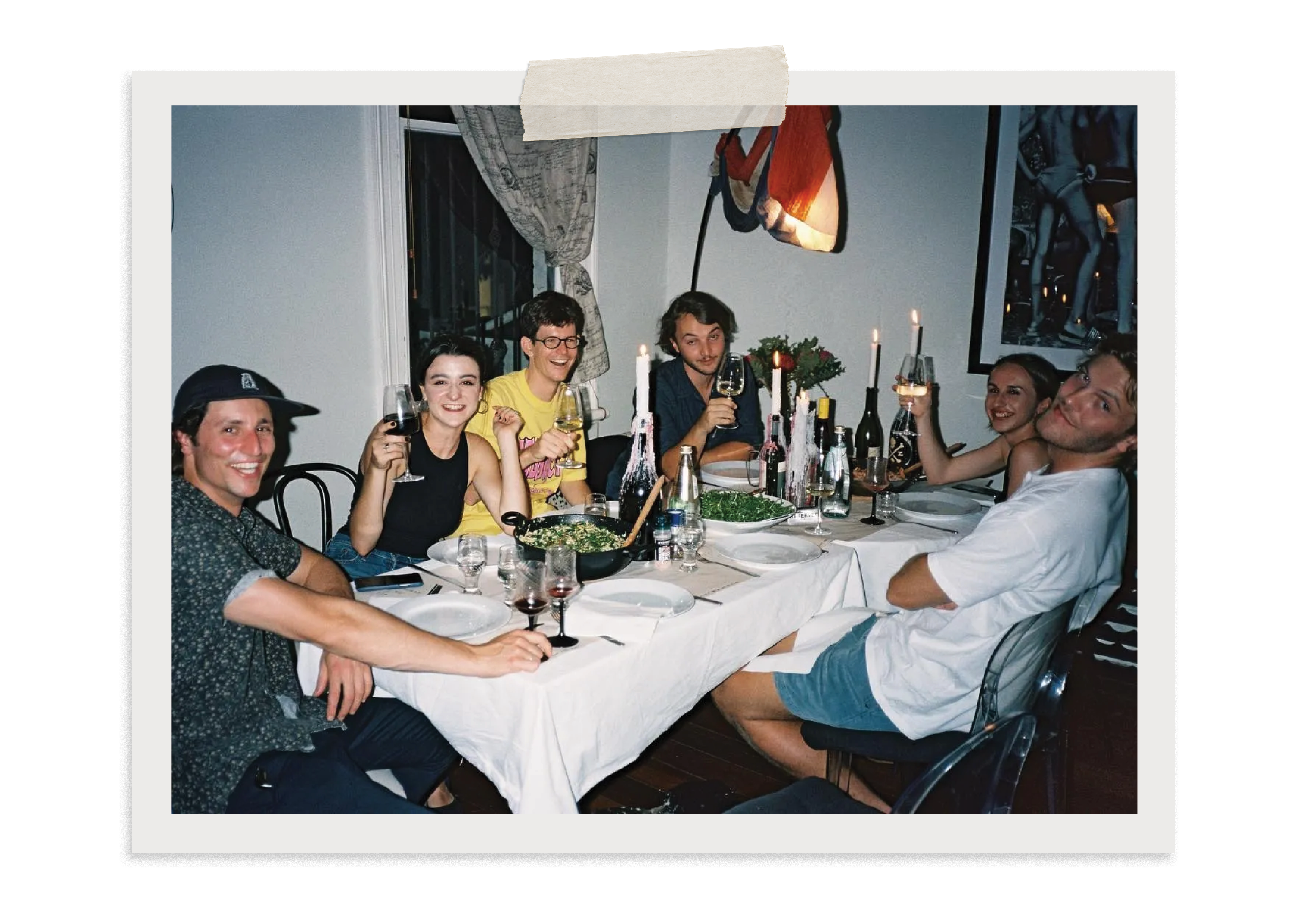
We all know that the amount of drinking isn’t directly proportional to the amount of conflict that might arise, but I’d say the chances are about 1 in 6. This initially innocuous activity starts to take on a whole new shape, as the statistics show that the state of the table is, in fact, directly proportional to the state of the conversations being had around it, and once the first drop of wine is spilled, the fleck of red pulsing as it’s absorbed by the linen, all bets are off.
There are, of course, few things more revealing than where someone chooses to sit at dinner. It immediately establishes a quiet hierarchy, either constructed over years of companionship or one bound to set the tone and dictate dinners for the foreseeable. Admittedly, this observation is skewed ever so slightly when couples are involved, and even though it deviates from the overall hierarchy of the table, it certainly gives you a quick insight into who forgot to put their dirty socks in the laundry basket last night. It’s all social choreography.
If seating has been allocated, then you, as host, have been exposed. Your own internal hierarchy, carefully constructed over time, has been painted onto the tablecloth. My personal preference for allocating is to sit couples at opposite ends of the table. If the aforementioned socks have set in motion a fight much larger than the contents of the laundry basket, this keeps things civil and allows for breathing room. If no socks were involved, the underlying current of familiarity generated between the two, often manifested in eye contact when so-and-so returns once more to a topic that has been circling the conversation drain for years, has enough to power a sort of bond and soft flirtation across the table for all to tap into.
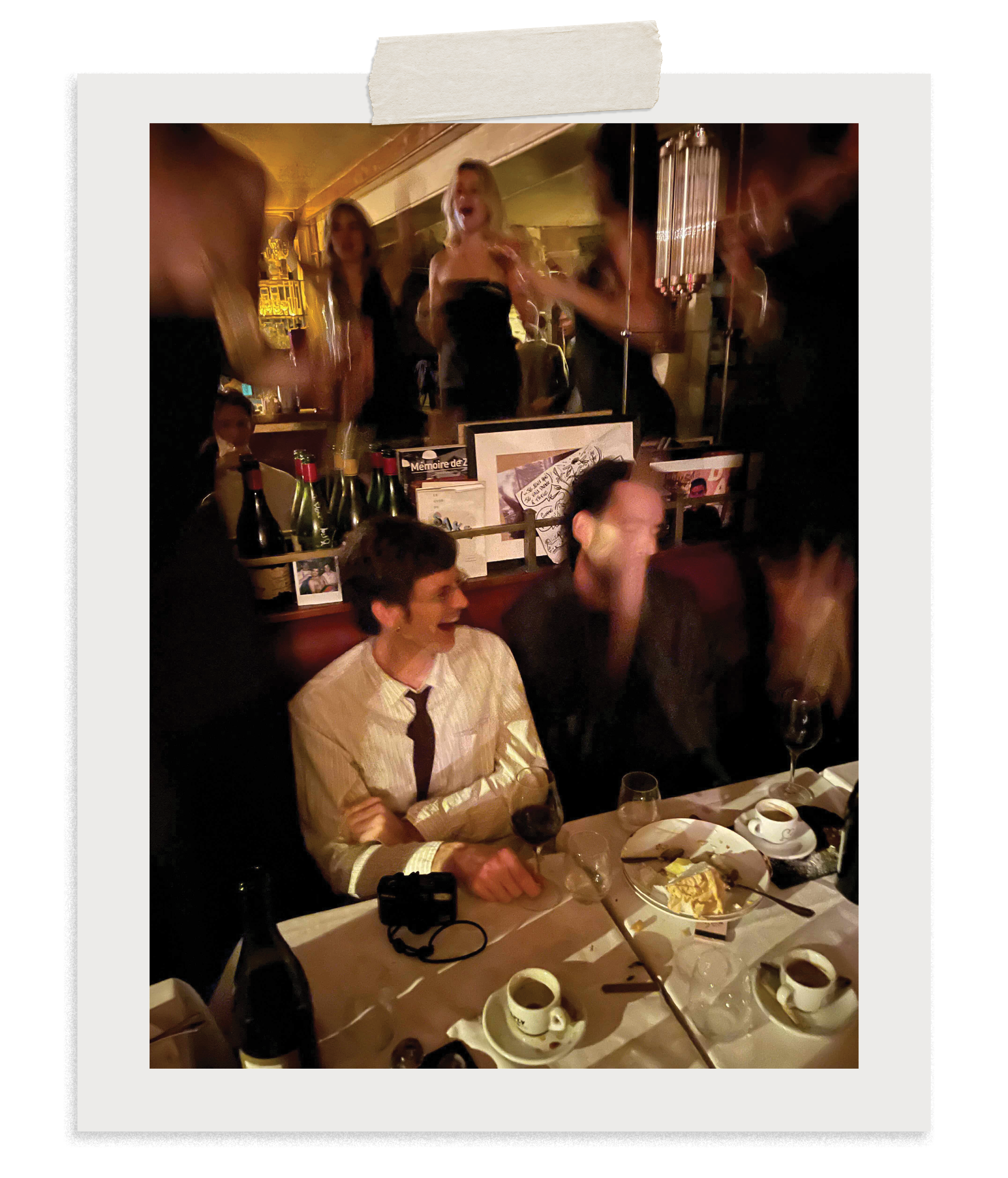
Perhaps this is why hosts become quietly obsessive. The lighting is adjusted, the tablecloth ironed, the wine chilled to precisely the temperature no guest will consciously notice. We tell ourselves these details are incidental, yet remove them and the spell breaks immediately.
Humans have spent centuries refining a set of conditions that encourage connection, revelation, conflict and intimacy, and the dining table remains one of our most enduring stages.
The white tablecloth, the polished glassware, the carefully considered seating plan. We tend to think of these as details. They are not details. They are conditions. Conditions designed to encourage confession, disagreement, flirtation, friendship and occasionally a spectacular argument over absolutely nothing.
Which may explain why, centuries after Brillat-Savarin, and decades after Dickie Greenleaf asked the question in Rome, we continue to gather around tables in much the same way.
Not because we’re hungry.
Because we’re curious about one another.